Brands need motion content because it captures attention faster than static images and shows products in action rather than describing them. Movement naturally holds a viewer’s eye longer in a feed dominated by still images, and a few seconds of motion can communicate a feature that would otherwise take several sentences to explain. This applies across ads, landing pages, app store listings, and portfolios, not just social feeds.
This isn’t about trends or gimmicks. Motion content — short animated clips, kinetic mockups, looping product showcases — has become a core part of how brands communicate, not just how they decorate their feeds.
The Problem With Static Content
A static image can only say so much. It shows a single moment, a single angle, a single idea. If a brand is trying to explain how an app works, show off a new feature, or simply stand out in a crowded timeline, a still image often needs a caption to do the heavy lifting.
Motion removes that burden. A few seconds of movement can show an interface in action, reveal a product from multiple angles, or guide the eye exactly where the brand wants it to go — all without a single word of explanation.
What Motion Communicates That Static Can’t
Movement carries meaning on its own. A smooth transition feels polished and trustworthy. A quick, snappy animation feels energetic and modern. A slow fade feels premium and considered. Brands use these qualities intentionally, the same way they choose a color palette or a font.
Motion also builds a stronger sense of realism. Watching an app scroll, a button get tapped, or a screen transition mimics how people actually experience a product, which makes it easier for an audience to imagine using it themselves.
Where Brands Actually Use Motion Content
Motion content shows up across almost every part of a brand’s presence today:
- Social media ads and posts — short loops that grab attention before a thumb keeps scrolling
- Landing pages — animated mockups that show a product in use instead of a flat screenshot
- App store listings — preview videos that demonstrate real functionality
- Email campaigns — subtle animated visuals that make a message feel more current
- Pitch decks and portfolios — motion mockups that make design work feel alive rather than static
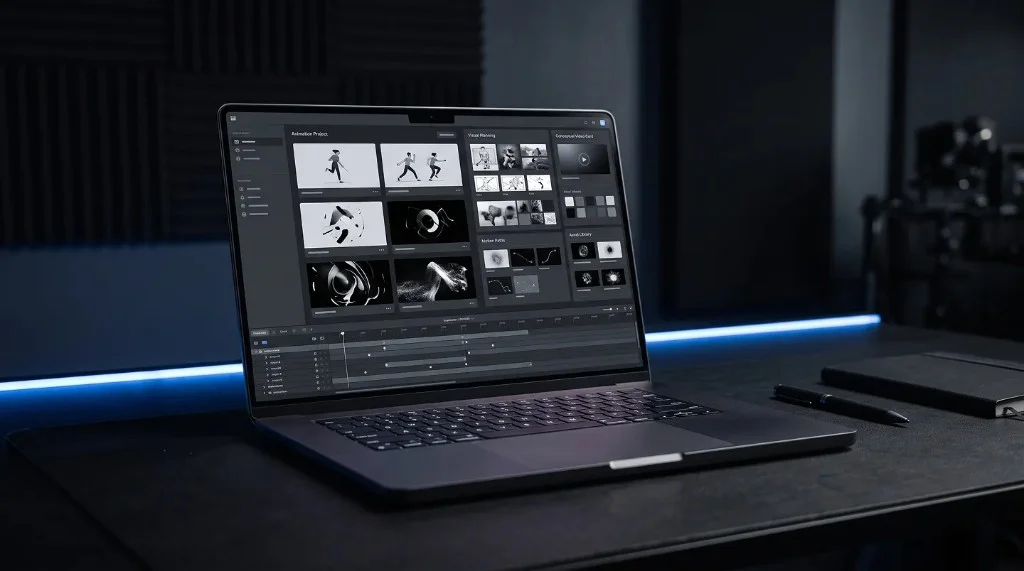
None of this requires a big production budget. Many of the most effective motion assets are simple: a phone mockup with a screen recording playing inside it, a looping product shot, or a clean transition between two states of an interface.
The Business Case for Motion
Brands invest in motion content because it changes how people engage with their message. Movement naturally draws the eye, which means motion content tends to get noticed faster in a feed full of static posts. It also helps communicate value more efficiently — instead of writing three sentences explaining a feature, a five-second clip can show it directly.
For service providers and freelancers, this translates into a tangible advantage: a portfolio or social profile built around motion content signals that the creator understands modern visual communication, not just design fundamentals. That perception alone can be the difference between a scroll-past and a client inquiry.
How Brands Can Start Using Motion
Getting started doesn’t require animation expertise. Some practical entry points:
- Turn existing screenshots into motion mockups. A static app screenshot placed inside a moving device mockup instantly feels more dynamic.
- Keep loops short and seamless. Three to six seconds is often enough to communicate an idea without losing attention.
- Prioritize clarity over complexity. The goal is to show something clearly, not to impress with effects.
- Reuse motion across channels. The same clip can work as a social post, a landing page background, and part of a pitch deck.
Motion Is Becoming the Baseline, Not a Trend
Motion content isn’t a passing trend — it’s becoming the baseline expectation for how brands present themselves online. Static images will always have their place, but movement is what captures attention first and communicates value fastest. For brands and creators alike, learning to think in motion is quickly becoming as essential as knowing how to write a good caption.
Frequently Asked Questions
Does motion content require a big production budget?
No. Many effective motion assets are simple, such as a phone mockup with a screen recording inside it or a looping product shot.
Where should a brand use motion content first?
Social media ads and posts are usually the highest-impact starting point, since they compete directly against a feed full of static images.
How long should a brand’s motion clips be?
Three to six seconds is often enough to communicate an idea clearly without losing the viewer’s attention.