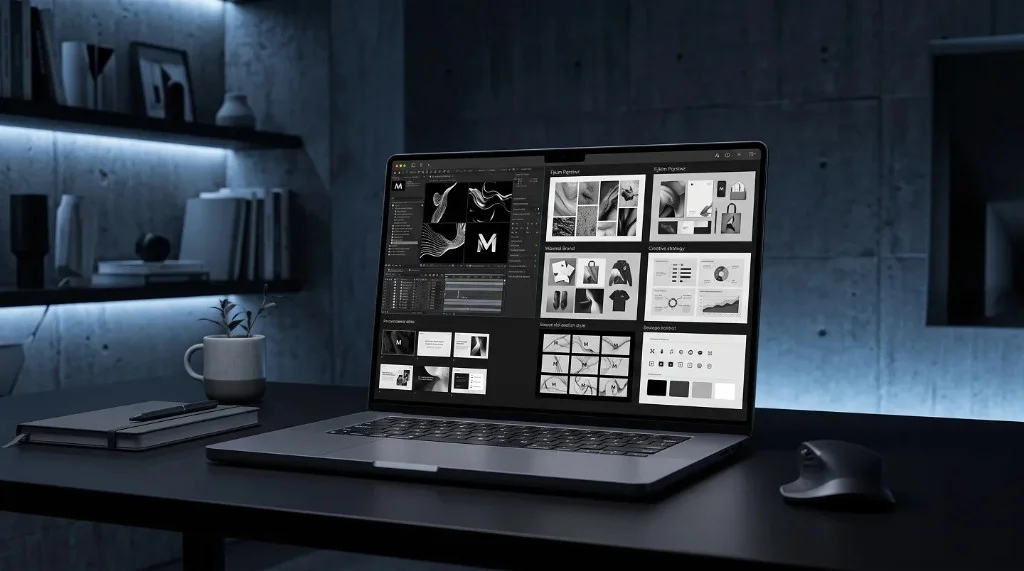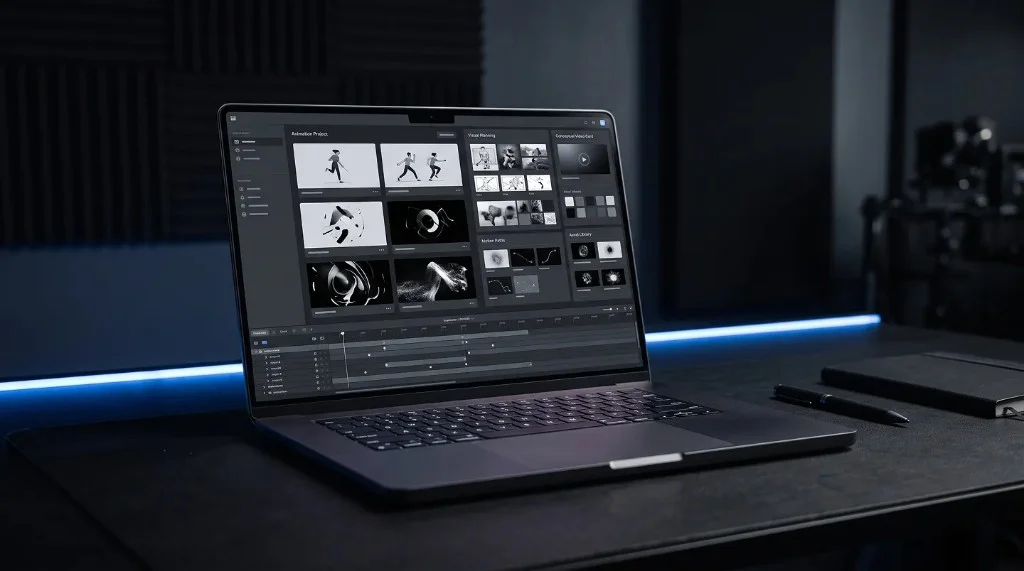
Motion creators run out of momentum more often from a lack of ideas than a lack of skill. Seven formats consistently perform well: before-and-after transformations, quick educational clips, process breakdowns, client showcases, trend-based content, templates, and comparison videos. Rotating through a handful of these on a regular schedule solves most of the “what do I post today” problem.
Why Content Variety Matters
Posting the same type of content repeatedly can make an audience lose interest quickly, even if the quality stays high. Mixing formats keeps a feed feeling fresh and gives different types of viewers a reason to stop scrolling. It also gives potential clients a broader sense of what a creator can actually do.
Below are content categories that consistently work well for motion creators, regardless of niche.
1. Before-and-After Transformations
Showing a static design turned into a motion mockup — or a rough screen recording transformed into a polished, animated showcase — is one of the most effective formats available. It demonstrates value instantly, without needing much explanation.
2. Quick Educational Clips
Short videos that explain a single concept — what frame rate means, why a certain aspect ratio works better for mobile, how a loop is made seamless — perform well because they offer real value in a short amount of time. Educational content also builds credibility, since it shows genuine expertise rather than just finished results.
3. Process Breakdowns
Showing part of the creation process, even briefly, tends to attract engagement. Viewers are often curious about how a polished mockup or animation was actually made, and a simplified breakdown can make the work feel more impressive, not less.
4. Client Project Showcases
Sharing a mockup or motion video created for a real client (with permission) is one of the strongest content types for attracting new business. It doubles as a portfolio piece and social proof at the same time.
5. Trend-Based Motion Content
Adapting a current design or content trend using motion — rather than a static image — is an easy way to stay relevant while showcasing skills. This works especially well on platforms where trends move quickly and audiences reward fast adaptation.
6. Templates and Reusable Assets
Offering a simple mockup template, loop style, or transition effect that others can use tends to generate strong engagement, since it provides direct value beyond just watching. It also positions the creator as someone generous with expertise, which builds trust over time.
7. Comparison Content
Videos comparing two approaches — a static mockup versus a motion mockup, for example — help educate an audience while subtly demonstrating the creator’s own capabilities.
Staying Consistent Without Burning Out
The goal isn’t to use every format at once, but to rotate through a handful consistently. A simple rotation — one educational post, one process breakdown, one client showcase, repeated on a loop — removes the guesswork of “what do I post today” and keeps output steady.
Structure Beats Creativity for Consistent Posting
Running out of content ideas is rarely about lack of creativity — it’s usually about lack of structure. A small set of reliable formats to rotate through makes consistent posting far more sustainable, which is often the real driver of long-term growth.
For creators looking to quickly turn screen recordings or designs into content-ready mockups for any of these formats, the Frametion app makes the process fast and simple.
Frequently Asked Questions
How many content formats should I rotate through?
Three to five formats are usually enough. Rotating a small set consistently works better than trying to use all seven every week.
What’s the easiest content format to start with?
Before-and-after transformations are usually the easiest starting point, since they require minimal explanation and demonstrate value instantly.
How often should motion creators post?
Consistency matters more than frequency. Posting on a schedule you can sustain, even if it’s just once or twice a week, outperforms sporadic bursts of activity.